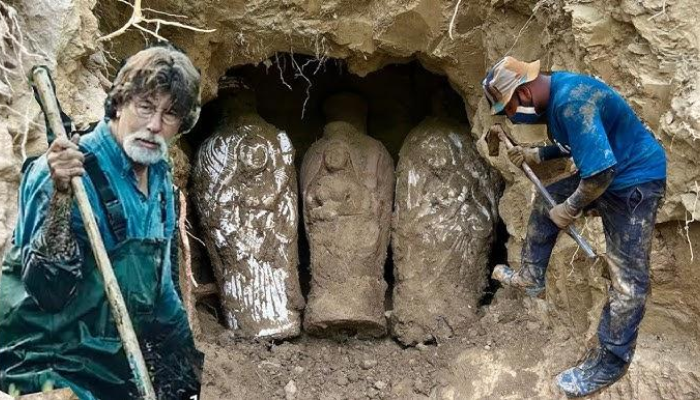
The phrase “authority confirms oak island mystery solved” has been circulating widely across online discussions, sparking curiosity, debate, and skepticism among history enthusiasts and treasure hunters alike. For more than two centuries, Oak Island—located off the coast of Nova Scotia—has been the center of one of the world’s most enduring archaeological mysteries. From rumored pirate treasure to hidden artifacts and underground engineering puzzles, the island continues to fuel global fascination.
However, despite viral claims suggesting that authority confirms oak island mystery solved, no universally recognized historical or archaeological authority has officially validated such a conclusion. Instead, what exists is a blend of ongoing excavations, speculative interpretations, and partial discoveries that continue to deepen the intrigue rather than close the case. This article explores the origins of these claims, the evidence often cited, and the reality behind the persistent mystery.
The Origin of the Oak Island Mystery and Early Legends
The story of Oak Island began in the late 18th century when reports of unusual ground formations and man-made structures first attracted attention. Early explorers discovered a series of mysterious pits, wooden platforms, and underground layers that appeared deliberately constructed. These findings quickly gave rise to legends of buried treasure, possibly linked to pirates such as Captain Kidd or even lost royal artifacts.
Over time, the narrative evolved into one of the most famous treasure hunts in history. The idea that authority confirms oak island mystery solved often stems from misinterpretations of these early discoveries. While authorities and explorers documented unusual structures, none concluded definitively that treasure or a solved mystery existed. Instead, the findings raised more questions than answers.
Local folklore further amplified the legend, suggesting that secret societies or historical figures may have engineered complex traps to protect buried riches. These stories became embedded in popular culture, fueling generations of excavation efforts.
Despite centuries of exploration, the early phase of the Oak Island mystery remains defined more by speculation than resolution. The foundation of the legend continues to shape modern interpretations, even as scientific methods attempt to separate fact from fiction.
Modern Excavations and Technological Discoveries
In recent decades, Oak Island has been subjected to more advanced archaeological techniques, including ground-penetrating radar, sonar scanning, and deep shaft drilling. These technologies have revealed anomalies beneath the surface, including voids, metal traces, and potential man-made tunnels.
These discoveries are often cited by proponents of the idea that authority confirms oak island mystery solved, though such interpretations are not universally accepted. While the anomalies suggest human activity, they do not conclusively prove the existence of treasure or explain the original purpose of the structures.
Modern excavation teams have uncovered artifacts such as old tools, wood fragments, and possible navigation-related items. However, each discovery tends to raise additional questions rather than deliver definitive answers. Some researchers argue that natural geological processes may explain certain findings, while others maintain that historical engineering remains the most likely explanation.
Despite extensive digging and investment, no conclusive “final discovery” has been validated by independent archaeological authorities. The mystery remains active, driven by both scientific curiosity and popular storytelling.
The Role of Media and Popular Culture in Shaping the Narrative
Television programs, documentaries, and online content have played a major role in amplifying the Oak Island mystery. These portrayals often highlight dramatic discoveries, suspenseful interpretations, and speculative connections to historical events. As a result, public perception has increasingly leaned toward the belief that something monumental has already been found.
This media influence is a key reason why the phrase authority confirms oak island mystery solved continues to trend online. However, many of these representations prioritize entertainment value over strict historical verification. The narrative is often shaped to maintain viewer interest rather than present definitive conclusions.
Reality television in particular has contributed to the idea that breakthroughs are imminent or already achieved. Repeated “near discoveries” and teaser revelations create a sense of ongoing resolution, even when no final proof exists.
While media coverage has undeniably increased awareness of Oak Island, it has also blurred the line between confirmed archaeological evidence and speculative storytelling. This has led to widespread misconceptions about the actual status of the investigation.
Theories Behind What Lies Beneath Oak Island
Numerous theories attempt to explain the Oak Island mystery, ranging from plausible historical explanations to more fantastical ideas. Some researchers believe the island may have been used for private banking, naval storage, or colonial-era concealment of valuable goods. Others suggest connections to the Knights Templar, Freemasons, or lost European expeditions.
These theories are often referenced when discussing claims like authority confirms oak island mystery solved, even though no single theory has been universally accepted. Each hypothesis has supporting arguments but also significant gaps in evidence, leaving room for continued debate.
Another widely discussed explanation is that the so-called “Money Pit” may be a natural sinkhole or limestone formation that was later modified by human activity. This theory attempts to reconcile geological data with historical excavation reports, though it does not fully explain all findings.
The diversity of theories demonstrates why the Oak Island mystery persists. Without definitive proof, each explanation remains speculative, contributing to the ongoing cycle of discovery and reinterpretation.
Why the Mystery Is Considered Unsolved Despite Claims
Despite widespread online assertions that authority confirms oak island mystery solved, the academic and archaeological communities have not reached such a conclusion. The key issue lies in the lack of verifiable, conclusive evidence that would definitively end the investigation.
Most discoveries on Oak Island are open to multiple interpretations. For example, wooden structures could indicate engineered tunnels—or simply remnants of historical logging activity. Metal objects might suggest treasure storage—or everyday colonial use. Without clear context, conclusions remain uncertain.
Additionally, the island’s geological complexity makes excavation difficult and often misleading. Water intrusion, shifting soil layers, and natural formations complicate efforts to distinguish human activity from natural processes.
As a result, the mystery remains officially unresolved. While exploration continues and discoveries are still being made, no authoritative body has declared the case closed or confirmed a final solution.
Conclusion
The enduring fascination with Oak Island continues to thrive on a blend of history, mystery, speculation, and modern media influence. While the phrase authority confirms oak island mystery solved captures attention and fuels curiosity, it does not reflect an officially recognized conclusion.
Instead, Oak Island remains an open archaeological puzzle—one that has resisted definitive explanation for over two centuries. Each new discovery adds depth to the story but stops short of delivering final answers. Whether the mystery will ever be fully solved remains uncertain, but its legacy as one of the world’s greatest treasure hunts is already firmly established.
FAQs
1. Is it true that authority confirms Oak Island mystery is solved?
No verified historical or archaeological authority has confirmed that the Oak Island mystery is fully solved.
2. What is the Oak Island mystery about?
It revolves around claims of buried treasure, underground structures, and unexplained artifacts on Oak Island in Nova Scotia.
3. Has any treasure been found on Oak Island?
No confirmed major treasure has been discovered, though several artifacts and structures have been found.
4. Why do people believe the mystery is solved?
Media coverage, online rumors, and misinterpretations of discoveries often fuel this belief.
5. What is the Money Pit?
The Money Pit refers to a deep shaft on Oak Island believed to contain buried treasure or hidden structures.
6. Who owns Oak Island today?
The island is privately owned and actively explored by treasure hunting teams and researchers.
7. Are the Knights Templar connected to Oak Island?
This is a popular theory, but there is no confirmed historical evidence supporting the connection.
8. What technologies are used in excavations?
Ground-penetrating radar, sonar imaging, and modern drilling equipment are commonly used.
9. Why is Oak Island difficult to excavate?
Water flooding, unstable soil, and complex underground formations make excavation challenging.
10. Will the Oak Island mystery ever be solved?
It is uncertain. While ongoing research continues, no definitive resolution has been achieved so far.